Marginal Voices of ‘The Beat Scene’, Edited by Elias Wilentz

How many Beats were there? That’s right. About four. Allen, Jack, William (who didn’t like being called a ‘beat’) and maybe Lucien that guy from the film with Daniel Radcliffe doing his best Americanish.51KN8mg2cNL._SL500_SX334_BO1,204,203,200_
Wait no. That’s bollocks.

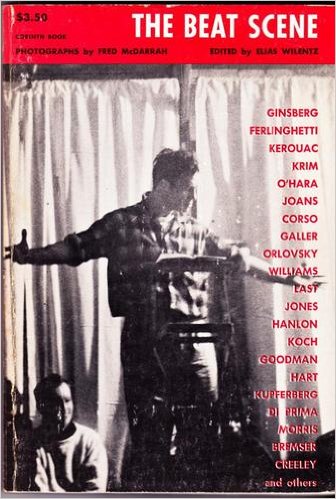
According to ‘THE BEAT SCENE’, published 1960 by Corinth Books, there were over 40 figures pertaining to the ‘Beat’ title. Not only that but women (shock!), black people (hor– oh, wait), plus bonus old age pensioners.

In one chapter Albert Saijo, a Japanese-American poet and translator, collaborates with Jack Kerouac and Lew Welch while a diligent Gloria–in keeping with the pop view of suppressed female beats–types their orations on a typewriter. As a boy Saijo was interned in an American-Japanese relocation centre during the ‘Yellow Peril‘ paranoia of WWII, but the placation of racial guilt doesn’t soften the chapter’s misogynistic vibe. Lines like ‘what am I, a girl?’ grate nowadays, never mind to the typist sat beside them. Gloria is even berated in the poem itself, a self-reflexive line that is unfortunate,

Thou irk’st but for gain
Gloria you aren’t getting the punctuation

Damn it, Gloria, god forbid you contribute to this poetic ego-stroking session. Gloria has the ultimate power over this typescript however–may be she planted herself there–we can only hope. You go, Gloria.


Female voices are heard over the angsty male clamour in the book, particularly from Diane DiPrima and Barbara Ellen. Ellen’s sole poem ‘Boris Oblesow’ seems a parody of scatological beat poems but the title links the near-extradition of an adopted Russian orphan by an American tank commander to the disillusionment of post-war American identity. DiPrima gets a mere extract from her longer poem ‘Necrophilia’, and Brigid Murnaghan includes a single poem. The feeling remains that it was hard to be considered a ‘beat’ woman.


Ted Joans’ contributions are the best reads in the book. He is the subject of a collection of fantastic shots by Fred McDarrah who provides all photography for the book, and Joans appears to be an eccentric: cowboy chaps in one photo, beret and cigarette in another. A whole series of photographs follow Joans at his ‘biannual birthday party’. He went onFullSizeRender-3.jpg to publish collections such as ‘Teducation’ and ‘Afrodisia’ and there’s an equally playful and edgy tone in Joans’ poetry. He provides some of the best visuals and poetry:

Let’s play something. Let’s play some-
thing horrible. You be Hitler and you
be Mussolini and you be Stalin and
you be Tojo, and you be Strijdom of
South Africa and I’ll be Gov. Faubus
Wow! What a cast of devils! Yeah,
let’s play that.


Casting a long shadow is the not so fantastic LeRoi Jones (later Amiri Baraka) an African-American poet known for controversy. In 1960 there were still five years before Jones would write a highly homophobic and minsogynst tract against white people in general. Another 41 years later Jones, now Baraka, wrote a poem about 9/11, blaming Israel with no apparent evidence: a rather strange man with a penchant for pasting large penises on the cover of his notebooks–probably his best contribution to the beats.

Another blog has noted this book as ‘a good primer’ for the beat scene in its entirety, and I would agree. Once the beats were galvanised by popular culture in the caricatures of exploitation film, the cream of the crop were immortalised by the larger publishers, leaving the rest to become the marginalised voices of the marginalised voices. It needs a new run in its exact 1960 formatting, because this book is 56 years old now and it feels modern in 2016.*

FullSizeRender-2

FullSizeRender.jpg
Kerouac, ‘Gloria’, Welch and Saijo

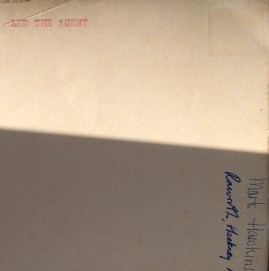
*My copy bought at Bookwise, Nottingham is inscribed by the former owner ‘Mark Hawkins, Hackney 1960’, but more interestingly has a typewritten name on the reverse of the front cover reading ‘LEE THE AGENT’. As said before, Burroughs’ didn’t like the beats but is it possible his NOVA Agent alter ego did?
FullSizeRender-4.jpg

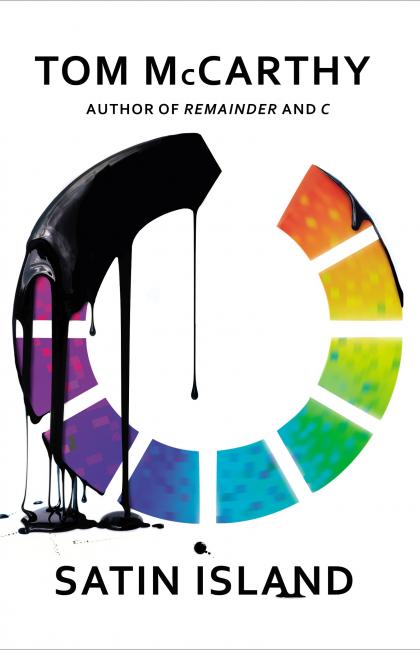
Bitesize Review ‘Satin Island’ Tom McCarthy

Tom McCarthy’s anthropological satire, Satin Island, is best described by the fictional anthropologist himself: Tom McCarthy-Satin Island

When these events (events! if you want those, you’d best stop reading now) took place, I found myself deployed not to some remote jungle, steppe or tundra… but to a business… I was the in-house ethnographer for a consultancy

McCarthy’s narrator, the very meta ‘U’, lays out his role as a commercial anthropologist, but he may as well be reviewing his own manuscript for Satin Island, which is global in scope and macro at sentence level. The narrative style is that of a report, beginning with chapters and parts: 1.1, 1.2, 1.3, and so on, or otherwise mimic the ‘versioning’ of software updates. Big events happen within a single claus—‘we had sex’—whilst lone images span a page or more. We are given glimpses of the ubiquitous ‘Koob-Sassen project’ which, we are told, has infiltrated our lives like fluoride in drinking water, undetected, divisive and toxic in large doses. Our only option, however, is to follow the stream of consciousness of an individual. But U, as a narrator, is capable of creating mystery from the everyday.

U becomes fixated on oil spills and parachute malfunctions, but fails any detective work concerning the bigger picture. Koob-Sassen is allusive, unobserved cultures are allusive, U’s sex scenes with his friend, Madison, are allusive. Things—events, truths, connections and links—feel just out of reach at all times. And this desire for some ultimate answer to a grand question (asked by whom?) sucks you into his own delusion, until the very end, where U becomes lost in the well-documented fog of male ennui. He loses credibility during the non-events acknowledged at the beginning; the book suddenly ends.

I read Satin Island as part of a writing module, and many readers in the group felt U was entirely serious and unaware of his own bluster—a kind of scholarly purple prose, as though McCarthy enjoys his own cleverer-than-thou style. I think that misses the point. The novel envelopes and regurgitates its own bogus theories. U deciphers celestial space as ‘the sky was a crime scene’ after the death of a parachutist is deemed suspicious, then later acknowledges his own academidrivel*. Take this–I warn you–lengthy example:

Why are your walls covered in pictures of parachutes? asked Tapio when he popped his head into my office one day. It’s to do with the Project, I told him; it’s overall… configuration. Oh yes? he said in his robotic voice. Yes, I repeated: there are these strands, and they converge; and there’s and overarching roof—or, let’s say, membrane, skin—above them. And, I continued, warming to my theme, what powers the whole thing isn’t some internal engine, since it doesn’t have one, but rather the way its structure, due to the way it’s, you know, structured, generates kinetic energy as everything around it—in this case, the air—passes through it.

I admire U’s ability to talk himself into his own ideas. The way profundity is forceable given the right threat and stimulus; something I very much enjoy about McCarthy’s writing in general is an ability to decipher the intellectual weight of words, ‘configuration’, as opposed to say ‘structure’. He mocks the carefully logocentric world of nuanced ideas. Characters are warded off the trail of U’s procrastination by the right words in the right combination: a rhetorical equivalent of ‘the boss is here, look busy!’. When U addresses the reader, he is convincing, like we are to ourselves. When he addresses his peers, he saves himself only by smashing together ideas with the right lexical epoxy.

parachutist_by_naumann-d4p81a4

When writing, I look back on McCarthy’s prose for it’s brave punctuation. His writing is littered with it, or rather, configured by it. In the small passage above, ellipsis, em dashes, numerous commas, multiple clauses. It’s very baroque and at the same time controlled–a conversational style that cossets a reader before a terrible reveal. It’s worth the effort for its style, especially if reading Satin Island serves to remind to your better-reads that ‘you must seek out his debut, Remainder’.

.

*the irony.

Bitesize Review ‘Paradises Lost’ Ursula K. Le Guin

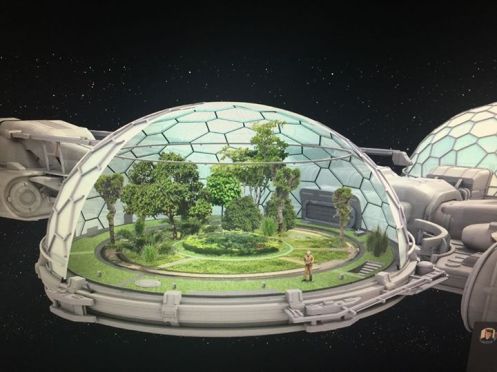
Two young friends travel through space, towards Earth 2.0, onboard a gargantuan craft containing an entire human colony, and are given their first (ever) clothes aged 7, during a weird public ceremony, but are otherwise just like any other humans. Except… all the signifieds we associate with our world—dogs, gods, tractors, A4 paper, forests, cities, books, polo shirts—are meaningless to them. Why? Because Earth (or Dichew as they call it), and habitable planets in general are nought but conceptual. Their craft is a great sealed unit without windows, whose speed is determined by current propulsion technology. Ursula K. Le Guin’s short story clearly pokes fun at the science fiction tropes of light-speed travel, and as a petty atheist, made me delight at the subversive polemic against religion that Le Guin cooks up for us using the snail’s pace interstellar journey. In a sense, religion onboard the spacecraft is a product of inter-generational boredom. Typical space fiction uses technology to bypass the need for real-time journeys. ‘Paradises Lost’ reads this sci-fi shortcut in reverse. It denies the ‘light-speed’ verisimilitude of Star Wars and the ‘warp drive’ excuses of Star Trek, and is about the inability to travel galactic distances in seconds, it revels in the several decades of necessary travel; it is about the generations whose job it is to complete an intergalactic journey by transforming their bodies into vessels for generations of humans, and the loss of linguistic meaning (and nouns) in the process.

Biodome in space

Hsjing, the Chi-ans character (of Chinese ancestry), distances herself from the mind-skewing effects of being a middle generationer by turning to mathematics and generally acting as a will-they-won’t-they prick tease to her friend Luis. Their lives in Discovery (the biodome/ intergalactic Air b’n’b/ Bluewater with thrusters) is free from the tyrannies of earthbound history; history is ‘what we have escaped from’, but Earth haunts their young minds in the virtual reality simulators. They experience hills, the wind, primitive earthly humans, birds, but their utopia is beset with its own perfection. Sex is a public phenomenon, children are created with a mildly eugenic lilt, and corpses are recycled into the very materiality of the world they just departed. It’s a carefully formulated and dramatised world that is gentle in its action but incredibly appealing for its analogous politics, and destabilising language.

‘She would still be part of their world, not as a being but as an endless becoming… They were all part of one another. All used and users, all eaters, all eaten.’

Back to those pesky signifiers—in the way only Leguin can, ‘Paradises…’ creates logical and creative coinages that sync with the world without jarring. Nor-ans and Chi-ans are North American and Chinese descendants, the numerical before names, such as 5-Liu Hsing and 5-Nova Luis indicate their generational number. A logic builds which sees the generations slowly slip from adoration of militant atheists to fearing their predestined world; a dirty earthen world which, if avoided, elevates those onboard Discovery to the cult status of ‘Angels’. So convincing is this religious analogy that when they reach Earth 2.0 (Shindychew, and they do reach it), the story becomes a Genesis tale turned on its head. The Angels drift away out of reach and the humans come to learn the shortcomings and delights of a planetary existence.

Le Guin deconstructs the earth-like planet with the same forethought she applies in the initial world-building onboard the spacecraft. Nature for the humans, beyond their own epidermis, is a problem: ‘Wind, air moving fast, hard, endlessly blowing, making you cold… restless, stupid, unpredictable, unreasonable, maddening, hateful, a torment. Turn it off, make it stop!’. Those who have chosen to land on Shindychew quickly learn of its dangers, and those choosing to continue into space forever, onboard an artificial environment doomed to fail sometime, see a return to earth as a sacrilegious ungratefulness to their celestial perfection. It preempts Tim Minchin’s barb that religious fundamentalists with luck might—like evolution—deny the theory of gravity ‘…and float the fuck away’.

An oft-talked of moment arrives when the ‘creatures about a millimetre long with green wings’ are named ‘dogs’, because they act friendly to the colonisers. It’s comical as decentred world-building should be, but also sad. What will humans forfeit to free themselves of history, and travel into the unknown where a majority of earthly knowledge is inapplicable? Will we have to one day reclassify a ‘worldview’, particular to Earth: Earth-centric or Terracentric thought?

‘Ach! what’s that on my neck? Oh, it’s just a dog’

This story could be a warning. Most likely that’s an overestimation, but as William Burroughs and Stephen Hawking alike warn the human race: we are fallible until we colonise space, and with that in mind I hope someday some humanoid digs this post out and wonders what the hell a wordpress is. ‘Paradises Lost’ brings to life cosmological problems in a way only feminism and science fiction sandwiches can, and ought to be taught more widely than it is.