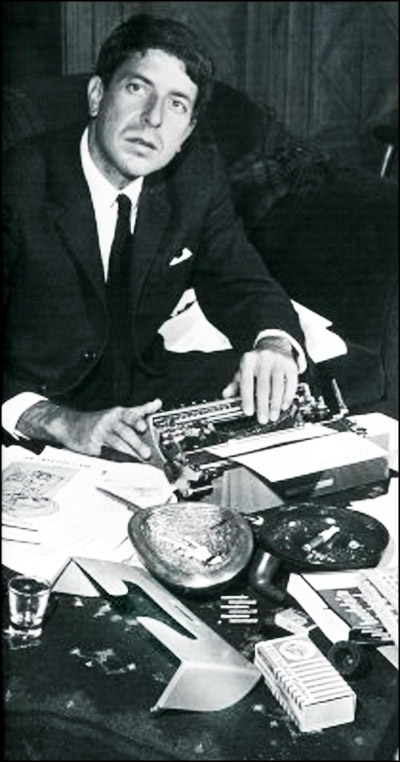
Typecasting: Bottling.

A little microfiction. Short shorts, flash fiction, micro-fiction, whichever epithet you prefer, fills a pretty little niche between narrative poetry and the short fiction. Here is a piece written on an ‘Empire Aristocrat’ (essentially a Hermes Rocket made in England). They (David Gaffney, the undisputed master of the form and many more) say you should not rely on a ‘punch-line ending’ which… well, I’ll let you be judge.

Bottling. Microfic.


Picture credit goes to: track0.com

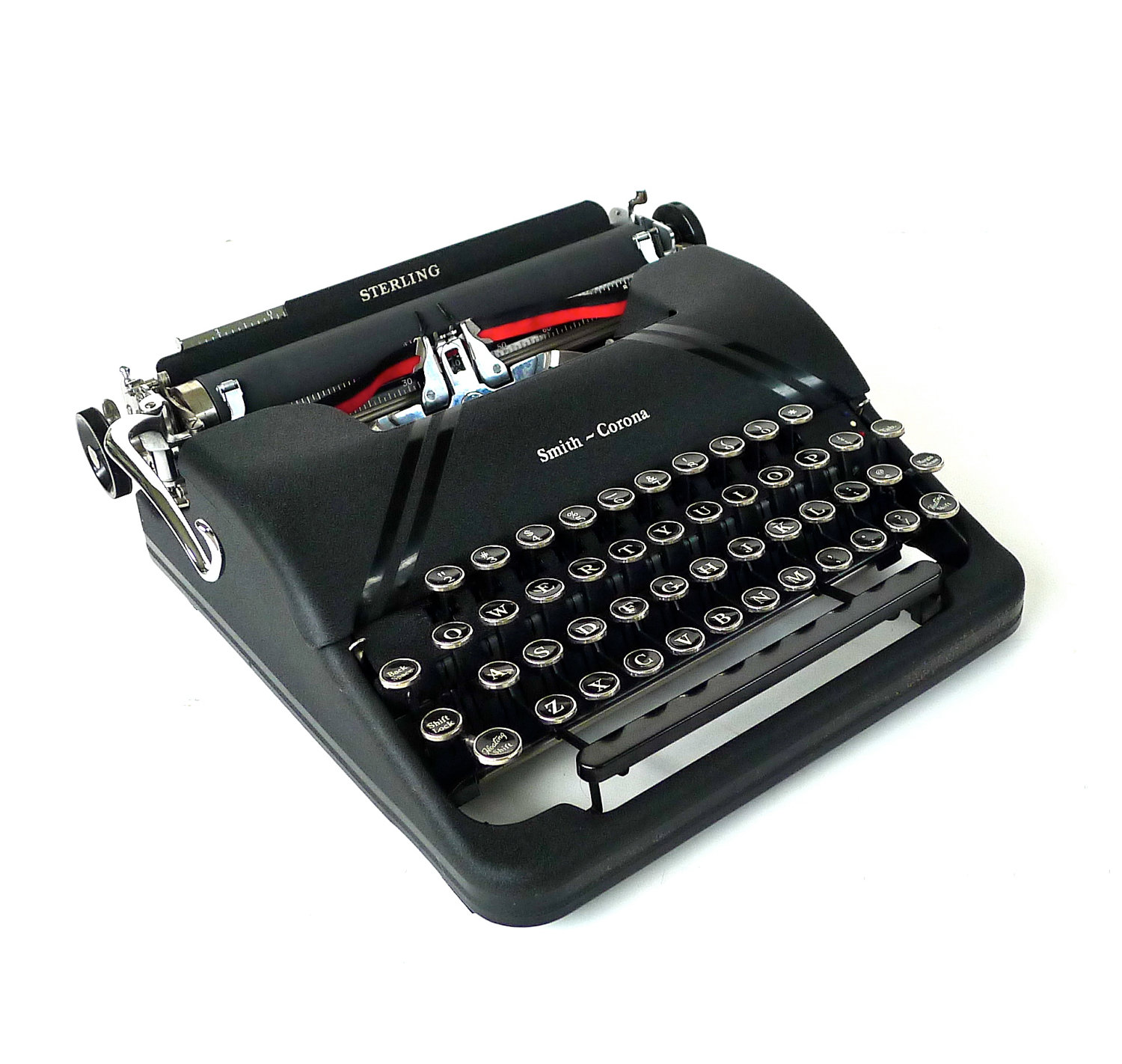
Dirty Type Slugs: the 1947 Smith Corona Sterling

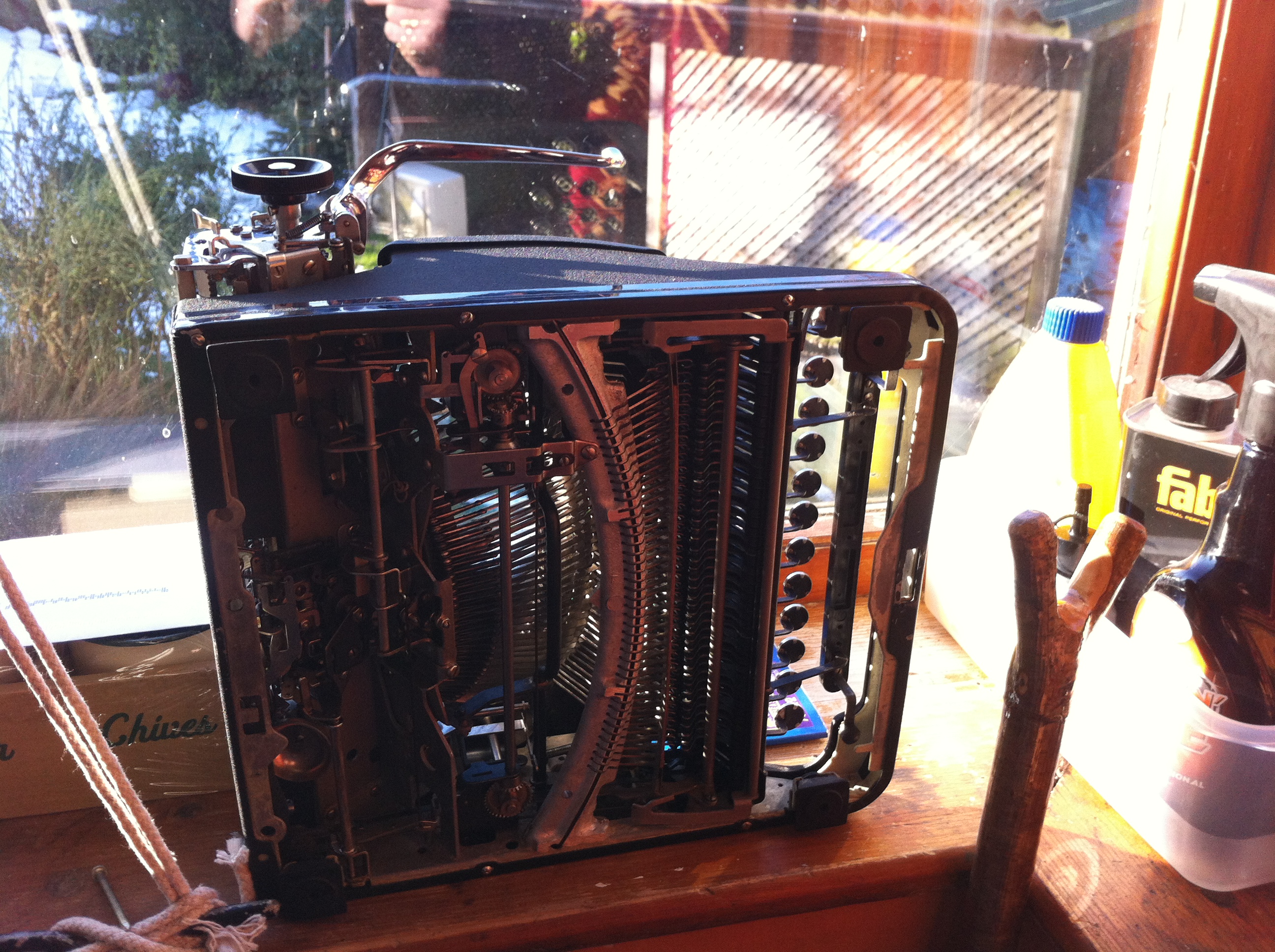
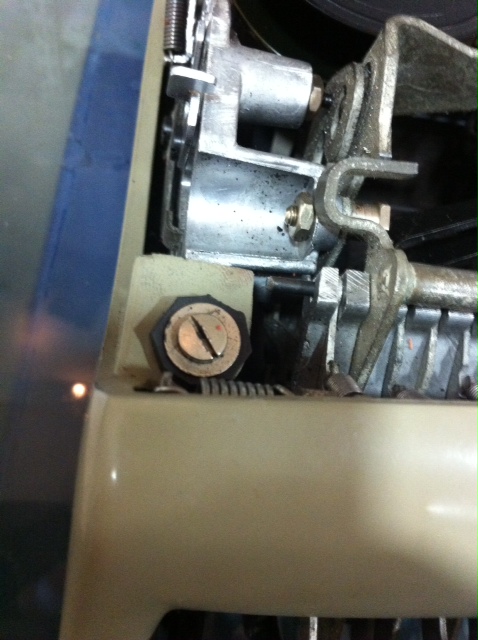
Half of the fun is fixing typewriters. My current record stands at 3 in 4 typers arriving and needing some immediate attention to get them functioning properly, despite ‘good working order’ descriptions. Soon I’ll start hunting the old fashioned way, in reclamation centres and thrift houses to get up close before adopting another basket case. This Smith-Corona didn’t arrive as a basket case, but the carriage would not return all the way to the right. Turns out that seventy year old catgut isn’t such a reliable drawband. I’ve added some photos of what it was like when I found the frayed, looped and hardened drawband wrapped around the mainspring (which is very small and note: only needs three turns on this model, not six like on Brother-style portables). Also, my Corona’s spring makes and incredible ‘ching’ sound when you wind it up, not a quiet ‘tink’ like the Brother. This noise gave me palpitations until I realised the spring hadn’t broken.

IMG_3451
The drawband in disarray after teasing it from the spring.


IMG_3450


On the Sterling the end of the drawband has a neat little hook that fastens over a small screw on the carriage. I’d intended to replace the catgut with more reliable fishing wire but given this little hook (a miniscule piece on such a large machine) I didn’t feel like getting rid of the original part. So onward ho, for the catgut. After unhooking the drawband I pulled it through the carriage to the opposite side to make untangling it easier as it had gotten into a tangle so bad, I can’t imagine how it happened. A little white spirit seemed to soften it too.

IMG_3469
The clear ‘carriageway’ with hook inside.

The turn of the screw was daunting (the title of a good short story by Henry James too), and because of this I set up the carriage with two turns on the spring. That returned the carriage, but only half way: no good. THREE turns is perfect, if a little fiddly to get the hook back through the carriageway. I fashioned a tool from a hairgrip and a chopstick (see below) that worked great and looks a lot like the tool used by the Egyptians to fish Pharaoh’s brains out of his skull via the nose.

Chopped gripstick
The ‘gripstick’ worked great.


IMG_3456
I thought I had fixed it, until…


After doing a lot of research on the typewriter forum, oz.typewriter and many others (including my nearest typewriter mechanic’s number), the job was worth the trouble and ended up being good fun to explore the mechanics and get it right. You’ve earned it when you’ve fixed it: the font is big and bold and serifed just right, the touch is very light and the Bakelite keys are easy touch-typers. After, dislodging a metric ton of dust and cleaning the filthy type-slugs I wrote out two pages of stream of consciousness drivel just to try every button. Well worth the work, catgut and all and for £50 all in, who can argue with that? Corona over Chromebook every time. As you can tell I’m smitten with it. The previous owner ‘remembers hunting and pecking his school homework on it in Canada and South Africa’. Most of my typewriters are better travelled than I am, so now it’s time to get to work on remedying that.

IMG_3445
The featured image is not my machine. The only difference is the ‘Made in Canada’ decal below the Smith-Corona logo.

As I said, manual machines, when they go wrong, are fun to fix. Still frustrating, patience still needed in bucket loads, but they aren’t going to freeze on you, the problem isn’t buried in an oblique miasma of binary or html code, no loading bars will move along at the speed of erosion, and the interface once fixed, is fixed.

Bukowski quotes so positive you could sell them at garden centres

He gets a bad wrap Bukowski. Whether for misogyny, alcoholism or dirty-realism, he’s a tough nut to love. It’s clear though, from a small crop of quotes, that his misanthropy was a pall covering a simple, hedonist’s love of life. Here are some quotes (a few admittedly pushing the boundaries) which you might see scrawled on a rough piece of wood that you’re Gran might buy for extortionate prices. You know what I’m getting at, those garishly optimistic platitudes hewn onto boards, strung up with twine and sold as ‘shabby-chic’ whatever the hell that is. How the hell did ‘shabbiness’ become commodified, anyway? Modern times, eh.

I will remember your small room. Buk. Fin what you love and let it kill you. Buk. and we are in bed together laughing. Buk. We're all going to die. Buk. We are here to laugh. Buk. The problem with the world. Buk. The less I needed the better I felt. Buk. She's mad but she's magic. Buk. Nobody can save you but yourself. Buk Life's as kind as you let it be. Buk.

Leonard Cohen’s Olivetti Lettera 22

I haven’t acquired the Olivetti Lettera 22 that Leonard Cohen famously ‘typed with under water’ and did, in a rage, throw across his room. I would like to think that thanks to the good folks at Hermes Delivery company, I do own an uncanny replica of the ill-fated machine. Although, his was a pistachio colour. Mine’s called il bruto Garibaldi: ‘The Brute Garibaldi’, because it’s Italian and has the rugged charm, liberality and war-like appearance of Guiseppe Garibaldi, a key figure in the Unification of Italy, and the namesake for a classic biscuit.

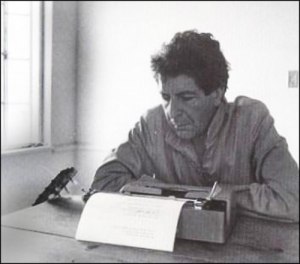
Leonard Cohen Lettera 22

I can see why Cohen fell in love with his Lettera, even sneaking onto the Olivetti work-floor to seek an illicit repair job from a typewriter guru. It’s action and type are svelte compared with Japanese typewriters. Features such as the touch-sensitivity settings, the paragraph indenter and the basket shift predate my Silver Reed by 20 years and do the job much better. It’s also quieter than a mouse’s cough. The details shout quality, even when they smell of old tobacco and are filled to the brim with 50 years of magnetic dust. The spring return lever and its folding design are genius touches.

‘I was in a mood of some extravagance and I put the typewriter in the bathtub and tried to type under water. Then I threw my manuscript for Flowers for Hitler in the bath and tried to scrub it with a nail brush.’*

Lettera flattering lamp

It’s a shame then, that this Lettera got sucker punched in transit. To tell the truth. I enjoyed making rubber grommets from an old iPhone case to replace the ones that once held the body in place. Think ‘atomised’, and that will give you an idea of the condition the grommets were in. I found bits of old rubber lining the inside of the Lettera and the body rocked on the frame. The front bar protecting the type keys was cracked and bent inwards, preventing the spacebar from moving. A bit of metal-hammering and duct tape reconstructive surgery and the face no longer interrupts the space bar.

Lettera gromet
Old iPhone case doubling as makeshift grommet.

Lettera ducttape stitch Lettera crack

Always send that well-worded email, even if you feel patronising, to spend longer than 30 seconds packaging something brittle and mechanical. This ‘replica Leonard Cohen Lettera’ arrived in way worse condition than the photos show. I bent the frame back to a better (not perfect) shape. It’s as though the typewriter has suffered a dislocated jaw or a bad stroke as the front lists to one side. Anthropomorphism of inert objects. That’s me all over. But I don’t name typewriters often, like I do cars. They’re a tool that should be used. I’ll post a short I wrote using the Lettera that has many working titles, one of them is ‘Misguided bullets’. Information I gathered about Cohen and his Lettera anecdotes were taken from the link below at 1heckofaguy.com. It’s a good summary of the trials, tribulations and triumphs he achieved with his little journalist’s portable. I wonder where that machine is now?


* Cohen quoted by Scott Cohen in his book, Yakety Yak, 1994
Gathered from: http://1heckofaguy.com/2011/02/23/leonard-cohens-olivetti-lettera-22-typewriter/

.

As a side note: I found myself using the Lettera with the cover off, initially to un-jam type-slugs, then to correct the ribbon spool nuts and finally to enjoy the sight of a compact portable spinning out words. After searching about I noticed that a lot of Lettera users end up doing the same.

Leonard Cohen - Cover off. Lettera Oriana Fallaci (1930 - 2006). cover off.


Typecasting: Riding the hell out of Kelso

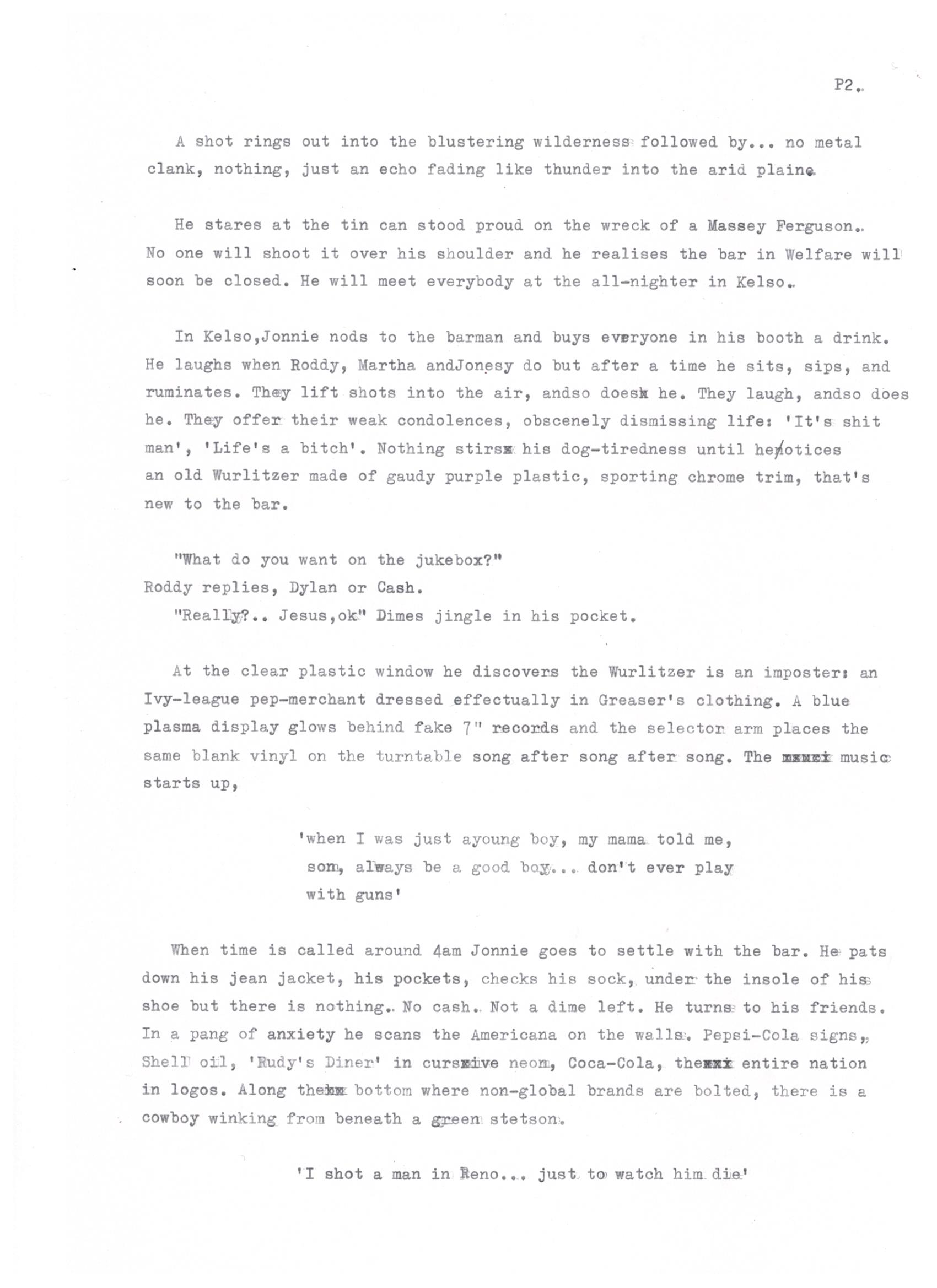
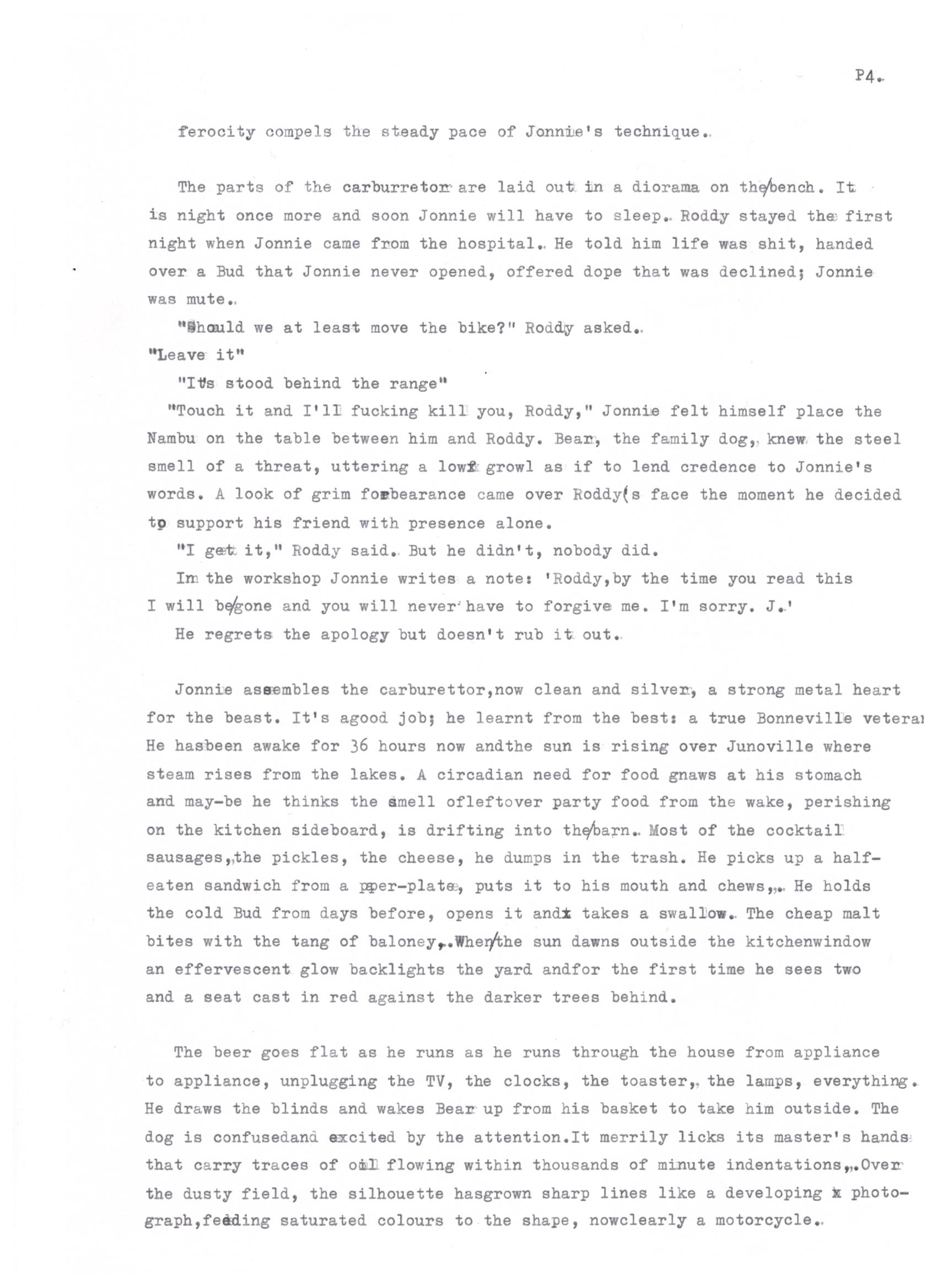
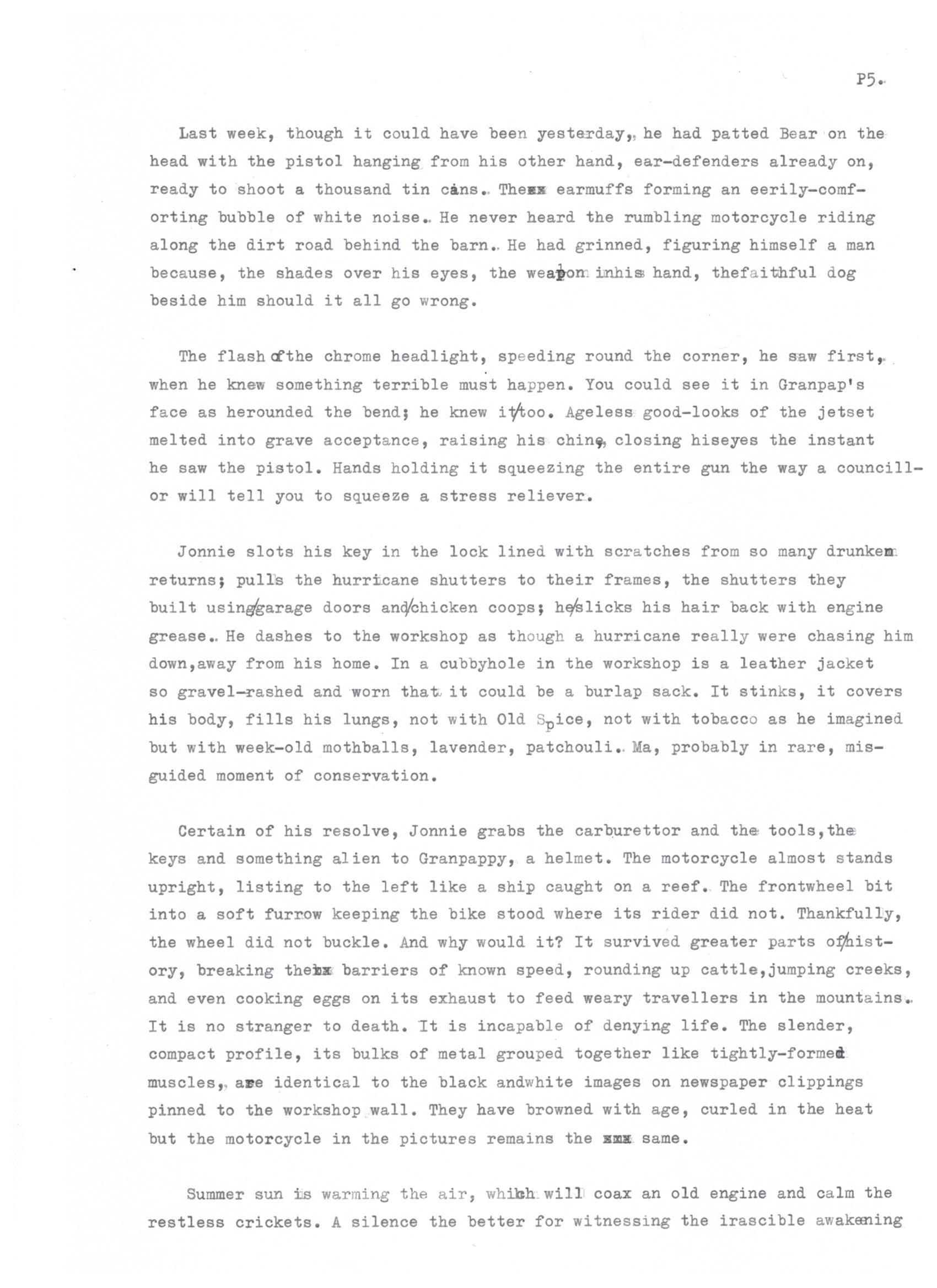
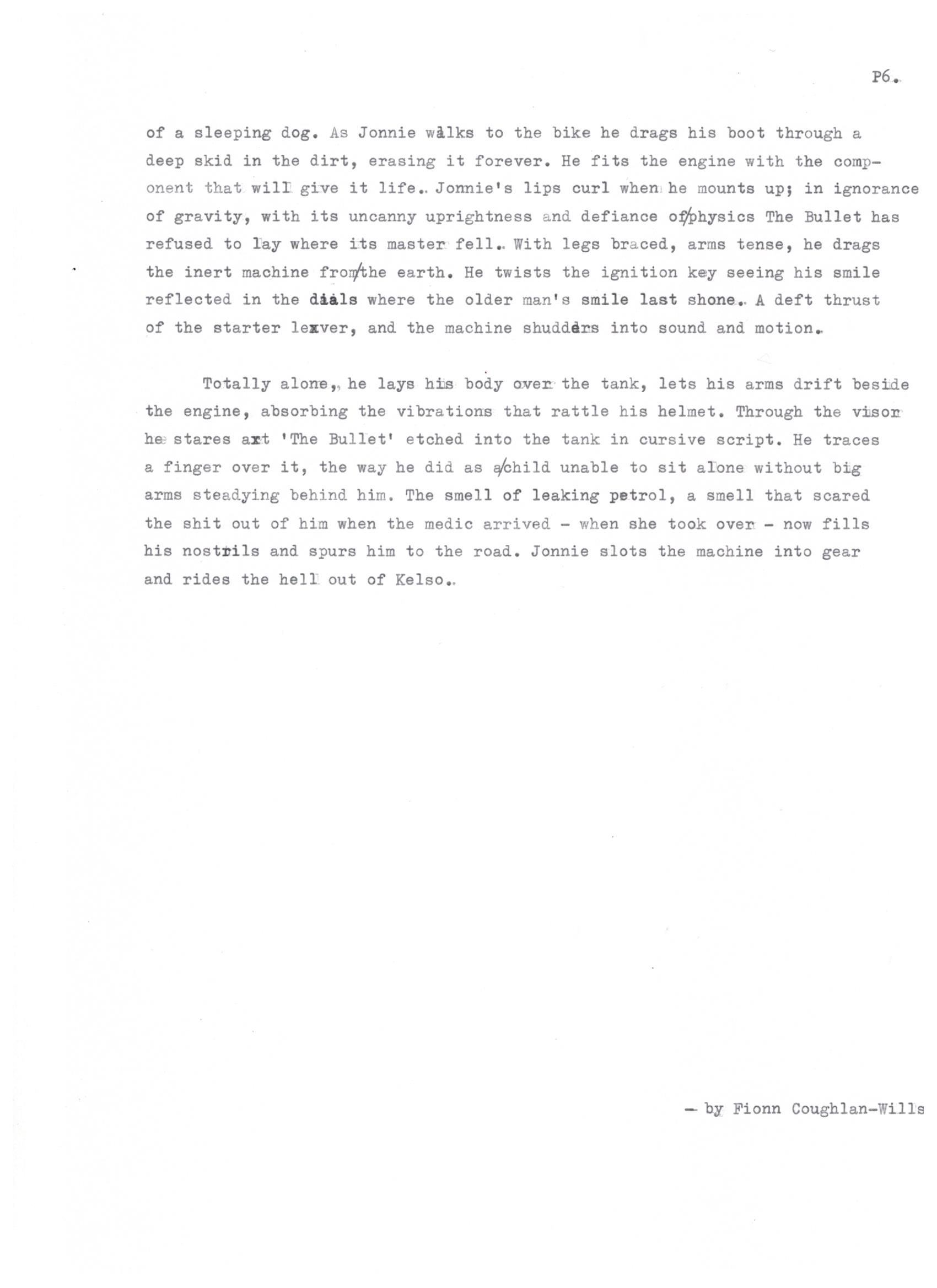
I’m venturing into realism. This is a rough first draft of a story I banged out. The short version: it’s about a young man dealing with the loss of his grandfather, and more besides. It needs paring down, sharpening, but its a lump of clay I’m happy to continue sculpting. A revision by friends won’t be resisted either. I’ll post a typecast of draft II sometime in the future.

Kelso I.
Page 1


Kelso II.
Page 2
Kelso III.
Page 3
Kelso IV.
Page 4


Typecasting: The Kind King Light of Mind

Uploading images of type-written text is one way to road-test material without contravening the provisos of many literary journals. That being: not to send in work that has been otherwise ‘published’. Included in that definition is the publishing accomplished on personal blogs.

The draft of a story below ‘The Kind King Light of Mind’, is just that, a draft. Every time I retype it, the story becomes a little different. Even the definitive and uncompromising medium of the typewriter didn’t strengthen my resolve to creating a version of this little surreal didactic that I’d be happy to set in stone. There is something about the ending, needs fleshing out.

Shaman 1. TKKLoM. II.
Part I.
Shaman 2
Part II.
Shaman 3
Part III.
Shaman 4
Part IV.


In future I’ll use double spacing.

F.

Tabulations: the Silver Reed 150

There is a wealth of information on the interwebs about most brands of popular typewriters. But it can be difficult to find much material on the models less-revered by the typospherians. When I bought this Silver Reed 150 ‘Tabulator’, it was largely due to the long-trusted description: ‘one lady owner from new’, with the added bonus bracket: ‘(my mum)’. That, and it’s shinier than a Jimmy Saville shell suit. Big Silver this.

It arrived with the original protective plastic cover slotted above the hammers, which I’m keeping to cover up its vital organs when not in use. On a whim I bought it with the assumption that Silver Seiko Co, Ltd who make the typer were a branch of the Seiko Watch Company. As it turns out I was wrong on that count. As is said in the car industry: the Japanese are the Germans of Asia where manufacture is concerned, and this Dale Winton’s face with type keys seems built like a tank. So, I’m not worried.Big Silver keys. this.
Silver Seiko, after a little research turns out, started life similar to its major Japanese competitor, Brother. It began as Marukoshi Knitting Machines, Ltd. in 1952, before appeasing the European market in 1955 by swapping out ‘Marukoshi’ for Silver, and putting away the knitting needles in 1967 to form Silver Seiko Co, Ltd. Since then Silver dipped there hand into as many businesses as possible, building paper folding machines, water purifying equipment, ozone gas generators; and dabbling in life insurance, real estate, brokerage. That gives some reassurance, right? If its nearest relative is the long-withstood ‘over 10 million sold’ Brother Kondo design spanning 30+ years and the company went on to put prices on the average man’s life and purify their water, a humble Silver Reed typewriter should be a belter.Big Brother this.
It is. Definitely a belter with the noise it throws out. I enjoy the hammering snap it makes. Everything feels solid, things are simple like the ribbon reverse which is just a case of flipping two arms that hold the spools. But there is no attempt at ‘insulating’ the thing from noise. I live and work in a boarding school and the house parent living nearest my flat HATES this thing. The kids love it, but the older woman that is otherwise deaf to a full-on fist fight seethes at it. Each time I’m tapping I hear a theatrical sigh of indignation from next door. The Silver gets all the more use for it, and the sighs add to the rhythm you get into when typing.

It seems even in 1977 the Silver company bypassed the craze for ‘Silent’ models that were produced in America and Europe as early as the 30s. It adds to the experience, requiring a bottle of codeine to battle the inevitable migraine – something nice and Beatnik about it… ‘the typewriter is holy…’ (totes posing with a Ginsberg quote). Kerouac used a desktop Underwood; Burroughs: various Antares, Hermes Rocket; Ginsberg, a Remington #5, and enough Benzedrine to bring down Shia LeBeouf (incidentally, doesn’t his name translate as ‘Shia The Beef’?).

Digressions. For £30.00 all in, I got a good machine in unused condition with the added charm of shouting about its tabulator function (which had been around for 40-50 years at the time). If it had been a pre-war Underwood it would be a collectors wet dream, alas it is not.Big SMith Corona

I hope this goes some way to helping anyone taking a punt on those hundreds of Silverettes on auction sites. As I said, there doesn’t seem to be a big fanfare for these machines; neither does there seem to be a big downside to them. They aren’t Gromas or Speedline Smith-Coronas but it is another dependable bulletproof Japanese typewriter.